


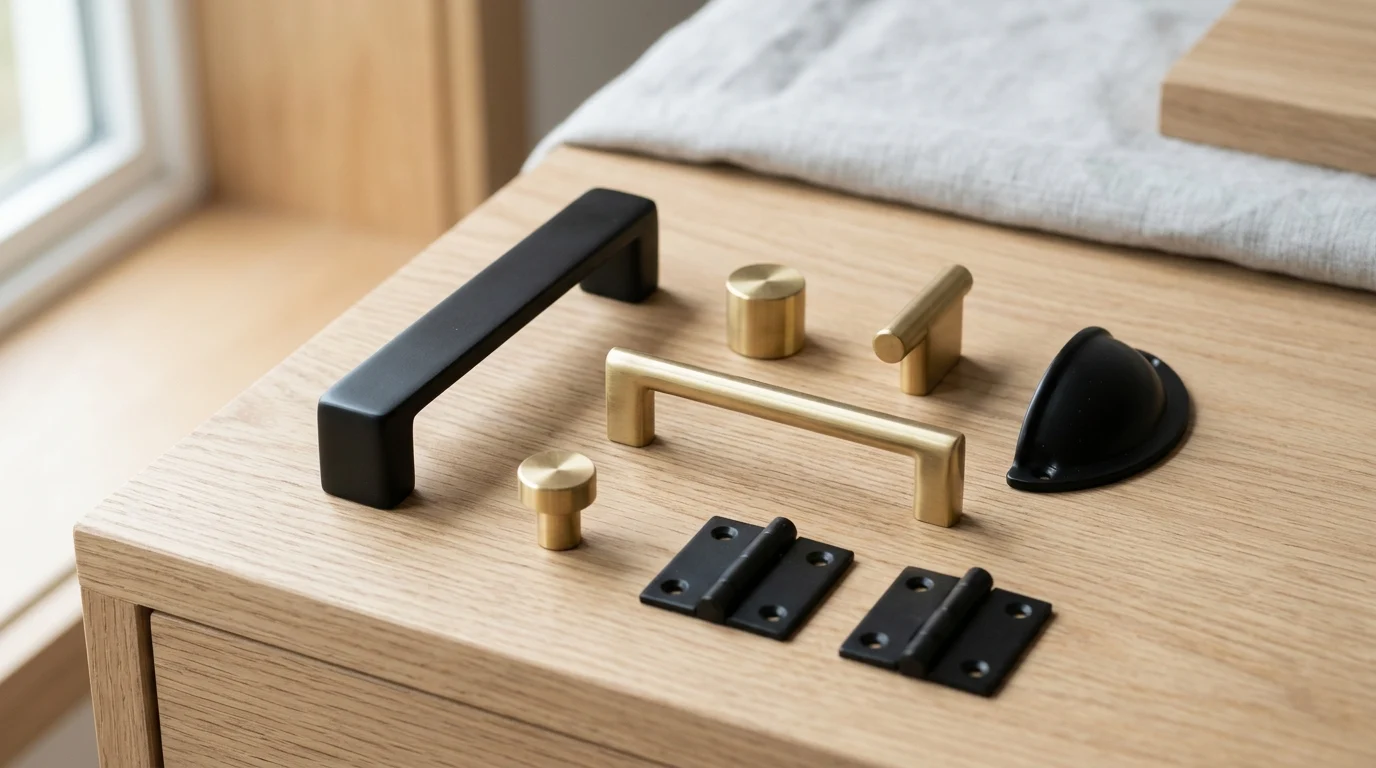
Furniture buyers notice the details first: the weight of a cabinet pull, the smooth action of a connector, and the finish that still looks new after years of use. For manufacturers, those details are not decorative afterthoughts—they are performance-critical components that influence product durability, perceived value, and warranty costs. This article explores how OEM Furniture Hardware supports stronger design differentiation through custom materials, precision die casting, CNC machining, mold development, and advanced finishes such as electroplating, powder coating, and PVD. It also outlines the practical decisions brands must manage, from tooling investment and MOQs to quality standards and supplier selection.
Why Quality Furniture Hardware Matters
Hardware serves as both the structural foundation and a defining aesthetic touchpoint in modern furniture manufacturing. Its role has evolved beyond mere utility to become a critical element of craftsmanship. High-quality hardware elevates the perceived value of cabinets, wardrobes, and freestanding pieces while ensuring long-term functional integrity.
For commercial and premium residential applications, specifying industrial-grade hardware reduces wear-related failures and associated service costs, ultimately lowering brand overhead. As consumer expectations rise, manufacturers must prioritize hardware that delivers flawless tactile feedback and durability, making the selection of an expert manufacturing partner paramount.
Defining Furniture Hardware for OEM Projects
Original Equipment Manufacturer (OEM) hardware encompasses specialized metal components designed to meet exact brand specifications rather than generic market demands. This category primarily includes customized Cabinet Handles, furniture knobs, decorative pulls, and structural connectors that integrate seamlessly into wood or composite panels.
Unlike off-the-shelf alternatives, OEM componentsare engineered for specific load-bearing requirements and ergonomic profiles. Manufacturers typically utilize robust materials like high-grade aluminum or Zinc Alloys, such as Zamak 3 (a zinc-aluminum-magnesium-copper blend), due to their excellent castability and dimensional stability. These materials ensure the hardware withstands continuous daily actuation and are often tested to rigorous industry standards, such as EN 15570 or ANSI/BHMA A156.9 cycle grades, to prevent structural fatigue or mechanical failure.
Hardware Factors That Shape Appearance
The visual impact and tactile quality of Furniture Hardware are largely dictated by surface finishing, which requires meticulous execution to achieve premium results. Treatments such as advanced electroplating, powder coating, and Physical Vapor Deposition (PVD) define the aesthetic character while providing critical protection against moisture, environmental degradation, and daily wear.
Applying a high-grade PVD finish with precise thickness tolerances guarantees exceptional scratch resistance and long-lasting color stability. Plating processes often involve multiple layers, including copper and nickel undercoats, allowing brands to seamlessly integrate polished chrome or matte black accents while maintaining rigorous anti-corrosion standards.
How OEM Manufacturing Improves Customization
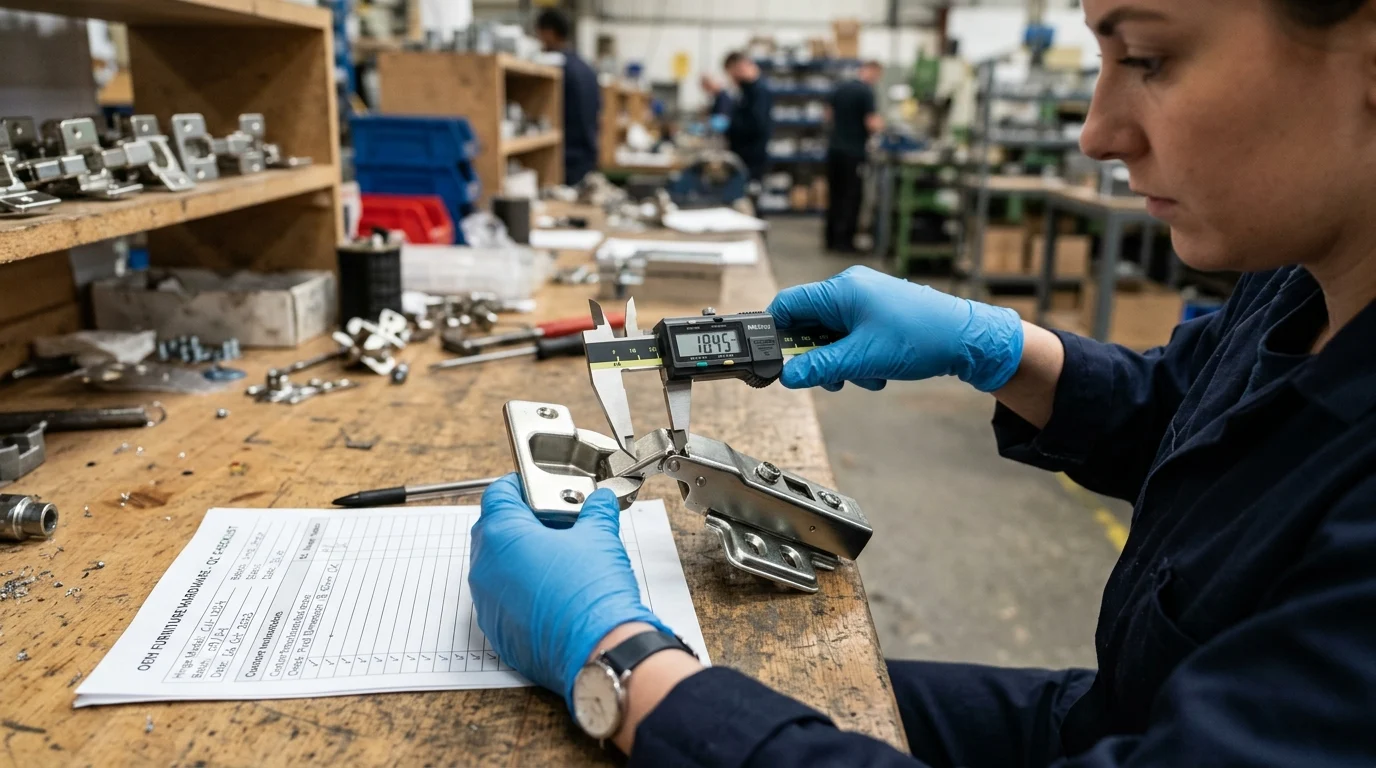
Bespoke OEM production eliminates the compromises of catalog hardware by allowing brands to dictate every geometric nuance, surface texture, and proprietary shape. However, this level of customization requires strategic planning. Buyers must navigate tooling cost recovery timelines, establish clear intellectual property (IP) and mold ownership clauses, manage the cash-flow implications of Minimum Order Quantities (MOQs), and account for the risk of extended lead times delaying product launches. When these variables are carefully managed, custom hardware yields an exclusive aesthetic that competitors cannot easily replicate.
Mold Making, Die Casting, and CNC Processes
The precision manufacturing process for premium hardware relies on a logical progression, moving from Design for Manufacturability (DFM) review and mold development to die casting, CNC machining, surface finishing, and Quality Assurance (QA). The journey from concept to mass production begins with high-precision steel molds that require several weeks to engineer and fabricate.
Once tooling is approved, zinc alloy and aluminum die casting facilitate high-volume production, creating complex, three-dimensional geometries with minimal porosity. Following the casting phase, CNC machining is essential to trim excess flash and achieve tight engineering tolerances that casting alone cannot hold. This multi-stage approach ensures every handle fits flawlessly into designated mounting points, eliminating assembly line bottlenecks.
Standard vs. Custom Hardware Comparison
Evaluating the transition to custom hardware requires a clear understanding of the operational trade-offs compared to standard components. Custom solutions offer superior brand integration, though they necessitate longer lead times to accommodate initial mold creation and approval phases. The figures below are illustrative estimates that vary by region, material, and supplier.
| Feature | Standard Hardware | Custom OEM Hardware |
|---|---|---|
| Design Flexibility | Limited to existing supplier catalogs | Fully bespoke geometries, textures, and sizes |
| Tooling Investments | $0 (costs absorbed by supplier) | High initial cost; requires mold amortization |
| Production Lead Time | 1 to 2 weeks for in-stock items | 4 to 6 weeks (excluding initial mold development) |
| Brand Integration | Generic appearances | Proprietary logos and exact finish matching |
| Unit Cost at Scale | Fixed wholesale pricing | Often lower per-unit cost at high volumes |
| Quality Consistency | Subject to generic batch variations | Strictly controlled to brand-specific tolerances |
| Reorder Flexibility | High, often with low MOQs | Strict MOQs and longer production runs required |
How Brands Should Choose an OEM Hardware Partner
An optimal hardware partner must demonstrate rigorous quality control through facility audits, recognized certifications like ISO 9001, sample validation, and batch consistency testing. Maintaining strict defect limits across high-volume production runs is essential for minimizing assembly line disruptions. Furniture manufacturers should prioritize partners who offer end-to-end transparency and a proven track record rather than relying solely on marketing claims. Furthermore, buyers should weigh the risks of dependency on a single supplier and consider diversifying their sourcing strategy to ensure production reliability.
Key Sourcing Steps for Drawings and Materials
The technical sourcing process begins with the accurate translation of 3D CAD drawings into actionable manufacturing blueprints. Furniture brands must collaborate closely with their manufacturing partners to define critical material specifications, weight tolerances, and performance thresholds.
This collaboration includes mandating rigorous quality assurance protocols. For example, standard ASTM or ISO neutral salt spray testing is necessary to validate the corrosion resistance of electroplated and PVD finishes. Furthermore, clear documentation of dimensional tolerances and raw material composition ensures the final hardware meets international compliance standards. Establishing these parameters early in the quotation phase prevents costly revisions and clarifies the exact cosmetic and mechanical requirements of the project.
Benefits of Integrated OEM and ODM Capabilities
Partnering with a highly experienced manufacturer provides furniture brands with the distinct advantage of integrated OEM and Original Design Manufacturer (ODM) capabilities. Such integrated facilities allow buyers to leverage existing design frameworks while customizing key features, mitigating the risks of extended lead times and tooling costs.
To ensure successful product launches and long-term supply chain resilience, buyers should follow a comprehensive sourcing checklist:
Key Takeaways
- Specify industrial-grade Furniture Hardware to reduce wear-related failures, service costs, and long-term brand overhead.
- Use OEM manufacturing when Cabinet Handles, knobs, pulls, or connectors must meet exact brand specifications rather than generic catalog dimensions.
- Choose Zinc Alloy or aluminum die casting for complex, high-volume hardware that requires dimensional stability and reliable daily performance.
- Plan tooling costs, mold ownership, MOQs, IP terms, and lead times before launching a custom hardware program.
- Select protective finishes such as electroplating, powder coating, or PVD to improve scratch resistance, corrosion protection, and color stability.
- Validate hardware performance against relevant standards such as EN 15570 or ANSI/BHMA A156.9 when durability and cycle life are critical.
Frequently Asked Questions
What types of furniture hardware are commonly produced through OEM manufacturing?
OEM Furniture Hardware typically includes cabinet handles, knobs, decorative pulls, hinges, connectors, and custom metal fittings designed to match a brand’s exact dimensions, finish, load requirements, and visual identity.
Why choose zinc alloy or aluminum for furniture hardware?
Zinc Alloys such as Zamak 3 and aluminum offer strong dimensional stability, excellent castability, corrosion resistance, and durability, making them suitable for high-volume die casting and long-term daily use.
How do surface finishes affect furniture hardware quality?
Finishes such as electroplating, powder coating, and PVD improve appearance while protecting hardware from scratches, moisture, corrosion, and color fading, helping furniture maintain a premium look over time.
What should brands consider before starting a custom OEM hardware project?
Brands should clarify tooling costs, mold ownership, intellectual property rights, minimum order quantities, lead times, finish requirements, and quality testing standards before committing to production.
How does die casting support high-quality furniture hardware production?
Die casting enables repeatable production of complex metal parts with tight tolerances, smooth surfaces, and consistent strength, making it ideal for customized cabinet pulls, knobs, and structural fittings.